
Side Dishes
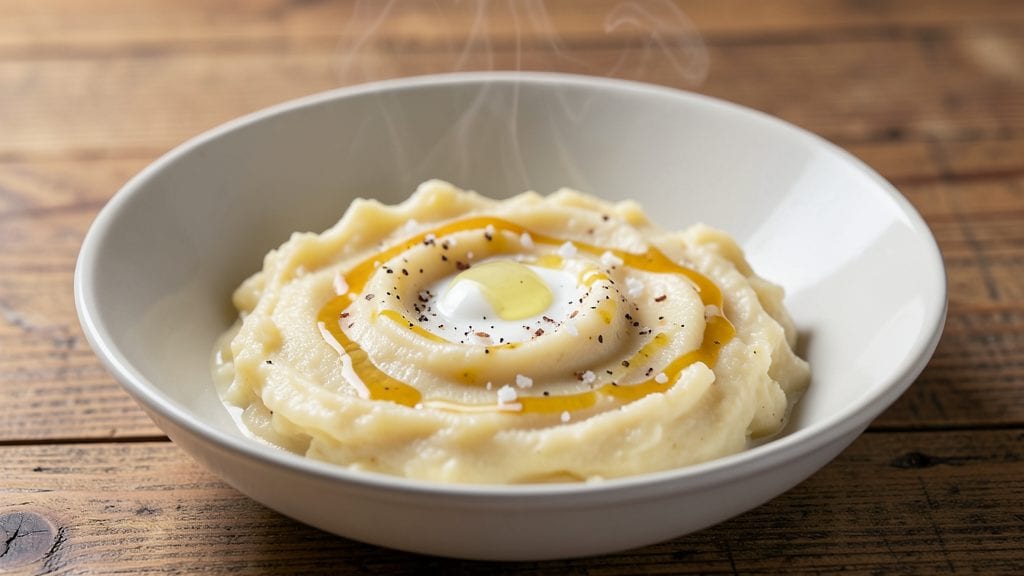
This German mashed potatoes recipe delivers the buttery smoothness and crispy vinegar crowns that make traditional Kartoffelpüree unforgettable. Growing up in Boston, I never expected to master German comfort food—until I discovered how simple it is to achieve that signature texture and flavor.
The secret lies in the potatoes themselves: waxy varieties like Yukon Golds create the perfect creamy base, while a vinegar bath transforms the surface into delicate, crispy edges.
The process begins with boiling the potatoes until tender, then draining them completely before mashing with butter, cream, and just enough salt to enhance their natural flavor.
What sets this recipe apart is the vinegar crown technique: a quick dip in cold water with a splash of vinegar before serving creates those irresistible crispy bits. It's a method I've perfected through testing—no special equipment required, just patience and attention to detail.
What you'll end up with is a side dish that's restaurant-quality at home: velvety mashed potatoes with a contrast of crispy edges that disappear between bites. The buttery richness pairs beautifully with roasted meats or hearty stews, while the vinegar crown adds a textural surprise.
This is the kind of mashed potatoes that turns ordinary meals into something special—without requiring advanced skills.
For extra flavor, consider adding roasted garlic, crispy bacon, or fresh herbs like chives. The recipe scales easily for crowds, and leftovers reheat beautifully. Let's get started on creating this German classic that's sure to impress.
Ingredients for german mashed potato
Waxy potatoes, rich butter, and vinegar for crispy edges—this is all you need for authentic German mashed potatoes.
| Ingredient | Amount | Notes |
|---|---|---|
| Yukon Gold Potatoes 🥔 | 2 ½ lb | Waxy variety for creamy texture |
| Unsalted Butter 🧈 | ¾ cup | Cold, cut into small pieces |
| Heavy Cream 🥛 | ½ cup | Full-fat for richness |
| White Vinegar 💧 | ¼ cup | For crispy vinegar crowns |
| Kosher Salt 🧂 | 1 ½ tsp | Adjust to taste |
| Cold Water 💧 | 1 cup | For vinegar bath |
| Roasted Garlic Cloves 🧄 | 3 cloves | Optional for extra flavor |
| Crispy Bacon 🥓 | ¼ cup | Chopped, optional garnish |
| Fresh Chives 🌿 | ¼ cup | Chopped, for garnish |
The potatoes are the foundation—Yukon Golds are ideal for their waxy texture and creamy finish. Buy organic if possible from stores like Whole Foods or Trader Joe's, as they tend to have fewer blemishes and hold their shape better during boiling. For the best results, avoid russet potatoes—they break down too much. If you can't find Yukon Golds, Red Bliss or Fingerlings work well too. The butter should be cold and unsalted—European-style butter like Plugrá or Kerrygold adds extra richness, but any high-quality unsalted butter will do. Measure it precisely: too little butter makes the mash dry, too much makes it greasy.
No heavy cream? Whole milk with an extra tablespoon of butter works in a pinch, though the texture won't be as velvety. The vinegar is non-negotiable for those crispy crowns—white vinegar is traditional, but apple cider vinegar adds a subtle sweetness. For the roasted garlic, smash the cloves before roasting for deeper flavor. If you're skipping the bacon, crumbled pancetta or chopped chives add a similar savory touch. The salt is crucial: kosher salt dissolves more easily than table salt, so measure carefully. If you're making this ahead, add the vinegar bath just before serving to keep the crowns crispy.
Mashed potatoes reheat best when made fresh, but you can portion and freeze for up to 3 months. Store leftovers in an airtight container and reheat with a splash of milk or cream to restore creaminess. For the crispy crowns, work quickly—the potatoes should be piping hot when dipped in the vinegar bath. Serve immediately for the best texture. This recipe doubles easily for crowds, so scale the butter and cream proportionally—don't cut corners on either. The vinegar crown technique takes practice, but once you master it, your mashed potatoes will be restaurant-quality every time.
Why You'll Love This Recipe
- No-Peel Hassle: I swear by Yukon Golds here—just scrub, boil, and mash. The skins stay put, so no tedious peeling or extra prep. Honestly, that’s 10 minutes I’d rather spend pouring wine.
- Creamy Edge, Crispy Truth: That splash of white vinegar? It’s the secret weapon—cuts through the richness while keeping the texture just right: velvety with a whisper of bite. Between us, this is the mashed potato my picky husband won’t skip.
- Weeknight to Holiday: Same recipe feeds my exhausted self on Tuesdays or impresses guests on Sundays. Double the batch, freeze half—it reheats like a dream. (Yes, even my kids ask for seconds after the third helping.)
- Budget Luxury: Butter and cream feel fancy, but they stretch far here. A pound of Yukons and a stick of butter make four servings that taste like you spent hours. My wallet and my dinner guests thank me.
Instructions for German mashed potatoes with crispy vinegar crowns
This method delivers velvety mashed potatoes with a crispy vinegar crown that's both elegant and satisfying.
Prepare the Potatoes for Perfect Texture
Start by peeling the 2.5 lb Yukon Gold potatoes and cutting them into even 2-inch chunks. Place them in a large pot and cover with cold water by about 2 inches. Add 1.5 tsp kosher salt to the water and bring to a boil over medium-high heat. Once boiling, reduce heat to medium and cook for 15-18 minutes until fork-tender.
Here's the thing—don't skip the salt in the cooking water. It seasons the potatoes from the inside out, and you can always adjust later. You'll know they're done when a knife slides in easily with just slight resistance. Drain the potatoes thoroughly in a colander, then return them to the pot and set aside for now.
Create the Vinegar Bath for Crispy Crowns
While the potatoes cook, prepare the vinegar bath by combining 0.25 cup white vinegar and 1 cup cold water in a small saucepan. Place this over medium heat and bring just to a simmer. Remove from heat and set aside—this mixture will create the signature crispy crown.
Don't let the vinegar mixture boil vigorously. You want it to simmer gently so it doesn't lose its crisping properties. The acidity in the vinegar will react with the starch from the potatoes to create that beautiful golden crust we're after.
Mash to Ultra-Smooth Perfection
To the warm potatoes, add the 0.75 cup cold unsalted butter (cut into small pieces) and 0.5 cup heavy cream. Using a potato masher or ricer, work gently to break up the potatoes while leaving some texture. Avoid overworking—this creates a gluey mess instead of the silky texture we want.
If you're using the optional 3 cloves roasted garlic, mash them directly into the potatoes at this stage. The residual heat from the potatoes will release their flavors beautifully. Taste and adjust seasoning with additional kosher salt if needed—remember, the vinegar crown will add acidity later.
Assemble and Create the Crispy Vinegar Crown
Transfer the mashed potatoes to a serving dish and shape into a mound. Using a spoon, create a well in the center about 2 inches deep. Pour the warm vinegar mixture into this well, then carefully spread it outward to cover the entire surface, creating a thin layer.
Here's where it gets interesting—the acidity will react with the starch in the potatoes as they sit. Place the dish under a preheated broiler for 3-5 minutes until the surface turns golden brown and crispy. Watch carefully to avoid burning—you want crispy, not charred.
Garnish and Serve Immediately
Remove from the broiler and immediately sprinkle with the 0.25 cup chopped fresh chives and 0.25 cup crispy bacon. The contrast of textures is what makes this dish special—the creamy mashed potatoes with their crispy vinegar crown and crunchy garnishes.
Serve while still hot so the crispy crown maintains its texture. Each bite should deliver that perfect combination of buttery smoothness and satisfying crunch. The vinegar crown adds a subtle tang that cuts through the richness of the potatoes.
Pro Tips For Making German Mashed Potato
- BOIL UNTIL FORK-TENDER: Yukon Golds need to be actually soft—no one likes gummy potatoes in their mash. Test with a fork: it should slide in like butter. I used to cut them small for speed, but bigger chunks (2-inch pieces) cook more evenly and give you that classic German texture. Don’t rush this—undercooked potatoes mean extra work later.
- SALT THE WATER LIKE THE SEA: German mashed potatoes rely on flavor, and salted water is where it starts. Toss in 2 tablespoons kosher salt (yes, that much) for every 5 pounds of potatoes. I learned this the hard way—weak water means bland potatoes, no matter how much butter you add later. Taste the water halfway through; if it’s not noticeably salty, add more.
- USE VINEGAR LIKE A CHEAT CODE: The vinegar isn’t just for tang—it’s the secret to that silky, almost custardy texture. Add 1 tablespoon white vinegar to the hot potatoes before draining. It breaks down starches and keeps the mash from turning gluey. Skip it, and you’ll end up with something closer to wallpaper paste than German comfort food.
- MASH IN BATCHES WITH A RUBBER SPATULA: Dumping everything in a food processor gives you glue. Instead, work in small batches with a sturdy rubber spatula, pressing the potatoes against the pot’s sides to incorporate air and butter. I was skeptical until I tried it—now I won’t go back. This is how you get that light, fluffy texture without overworking the starch.
Regional styles of german mashed potato
Bavarian Stampfkartoffeln
In Bavaria, mashed potatoes take center stage with Stampfkartoffeln, a rustic version where potatoes are boiled with their skins on, then mashed with butter, cream, and a touch of milk. The key difference? Bavarian cooks often add pearl onions and crispy bacon right into the mash.
I love using German-style butter like Bergkäse butter for that authentic richness. Serve with Schweinebraten (roast pork) for a true regional pairing. 🥔
North German Kartoffelpüree
North German versions like Kartoffelpüree from Hamburg strip the skins and mash the potatoes until completely smooth, almost like a thick soup. The secret here is potato starch—many cooks add 1-2 tbsp to achieve that signature velvety texture.
I've found Plugrá butter (available at specialty stores) adds a subtle sweetness that balances the cream. Garnish with chopped parsley and serve with Labskaus (a hearty sailor's stew).
Saxon Potato Dumplings
While not mashed potatoes, Sächsische Kartoffelklöße (Saxon potato dumplings) show how Germans transform potatoes into something entirely different. These dumplings use grated raw potatoes mixed with boiled potatoes, flour, and eggs, then boiled in salted water.
For a fusion twist, try adding mashed potato puree to your dumpling dough—it creates a hybrid texture that's both creamy and fluffy. Serve with gravy and roasted meats for a satisfying meal. 🌟
Swabian Vinegar Potatoes
In Swabia, they take the vinegar crown concept to another level with Essigkartoffeln, where boiled potatoes are tossed in vinegar, butter, and parsley while still hot. The acidity creates a crispy exterior without needing the broiler step. For extra flavor, add crumbled speck (smoked ham) and fresh chives.
This version is perfect for Linsen mit Spätzle (lentils with noodles) or any hearty stew. The vinegar adds a tangy brightness that cuts through rich dishes beautifully.
Berlin-Style Creamy Mash
Berlin's version keeps things simple but luxurious: creamy mashed potatoes with sour cream instead of heavy cream, plus roasted garlic and black pepper. The sour cream adds a subtle tang that pairs perfectly with Berliner Schnitzel.
For a modern twist, I've added smoked paprika to the butter mixture—it gives the mash a subtle smokiness that elevates the dish. This is the go-to side for any German feast in Berlin. 💛
Rhineland Potato Pancakes
While not mashed potatoes, Rheinische Kartoffelpuffer (potato pancakes) show how Germans love potato versatility. Grated potatoes mixed with onion, egg, and flour are fried until crispy. For a mash-pancake hybrid, try spreading mashed potato puree on top of the pancakes before frying—they absorb the flavor beautifully.
Serve with applesauce or sour cream for a sweet-savory contrast. This is a must-try for brunch or as a side with Rheinischer Sauerbraten.
Nutrition facts
Frequently asked questions
Why does German mashed potatoes have a crispy vinegar crown?
The vinegar crown creates a delicate contrast between the creamy mash and crispy exterior. When the warm potatoes react with the vinegar mixture, the starch forms a golden, crispy crust that disappears with each bite. This technique is key to authentic German Kartoffelpüree—it adds texture and a subtle tang that balances the richness.
Can I make this recipe without heavy cream?
Yes! Replace the 0.5 cup heavy cream with 0.5 cup whole milk plus 1 tbsp extra butter. The texture will be slightly lighter but still delicious. For extra richness, use half-and-half instead. The vinegar crown technique works the same way.
What's the best potato for German mashed potatoes?
Use waxy varieties like Yukon Gold, Red Bliss, or Fingerling potatoes—they hold their shape and create a creamy texture. Avoid russets, which break down too much. For the smoothest mash, peel them first and cut into even 2-inch chunks.
How do I fix lumpy mashed potatoes?
If your mash turns out lumpy, don't overwork it—this creates glue. Instead, pass the potatoes through a potato ricer or use a food mill for ultra-smooth results. For a quick fix, blend with an immersion blender until creamy. The key is gentle mashing while the potatoes are still warm.
Can I make this ahead of time?
Yes, but skip the vinegar crown until serving. Prepare the mash up to 2 days ahead and store in an airtight container. Reheat gently with a splash of milk or cream, then add the vinegar bath just before serving to maintain crispiness. Leftovers reheat beautifully for breakfast or lunch.