
Side Dishes
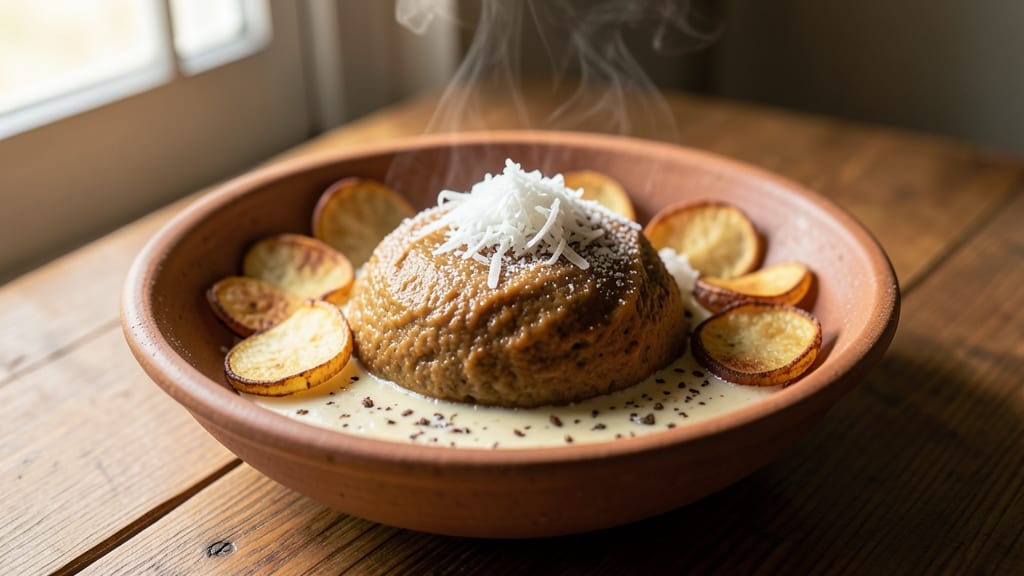
This potato fufu recipe brings the soulful, stretchy texture of West Africa to your kitchen table, where every bite feels like a warm embrace. 🌟 The secret lies in transforming humble potatoes into a smooth, dough-like consistency—whether through traditional pounding or modern blending—that pairs perfectly with rich stews like egusi or palm nut soup.
What makes this dish special is its cultural depth and versatility. In Nigerian homes, fufu is a staple for Sunday meals, while Ghanaian and Cameroonian variations often include cassava or yam for extra heartiness.
The process is simple but requires patience: boiling the potatoes until tender, then either pounding them into submission or blending until silky smooth.
By the time you're done, you'll have a mound of light, elastic fufu that's soft enough to tear with your hands yet firm enough to scoop up stew.
The aroma of steaming fufu mingling with savory soups creates a sensory experience that's both comforting and celebratory—perfect for family gatherings or a cozy weeknight dinner.
Serve immediately with your favorite West African stew for the full experience. This recipe delivers restaurant-quality results at home, whether you're making it for a crowd or treating yourself to a taste of tradition.
Ingredients for potato fufu
Six simple ingredients transform into West Africa's beloved hand-torn delicacy.
| Ingredient | Amount | Notes |
|---|---|---|
| Large Russet Potatoes 🥔 | 3 lb | Waxy potatoes preferred, peeled |
| Water 💧 | 6 cups | For boiling potatoes |
| Salt 🧂 | 1 ½ tsp | Kosher salt for seasoning |
| Vegetable Oil 🫒 | 2 tbsp | For greasing hands and bowl |
| Fresh Coconut Milk 🥥 | ¼ cup | Optional for creaminess |
| Cassava Flour 🌾 | ½ cup | For extra stretchiness |
| Groundnut Oil 🫒 | 1 tbsp | For serving (optional) |
| Palm Oil 🫒 | 1 tbsp | For serving (optional) |
Russet potatoes are your best bet—they break down beautifully into that signature fufu texture. Skip the red potatoes (they get gummy), and grab the biggest ones you can find. The Bob's Red Mill cassava flour is my go-to for that authentic stretch—find it in the international aisle or online. If you're feeling traditional, African markets often carry it, but the regular grocery store works too. For the coconut milk, full-fat canned versions work best—none of that watered-down stuff. And don't forget to soak your pounding bowl in water first (trust me on this).
No cassava flour? Extra potatoes or a little cornstarch can mimic the texture. Short on coconut milk? Warm water or a splash of palm oil keeps things smooth. The oil for serving is purely optional but adds that restaurant-quality finish—Trader Joe's has affordable groundnut oil if you want to splurge. For the pounding method, wooden pestles are traditional, but a clean hammer works in a pinch. If blending, pulse until it's still slightly lumpy—over-blending makes it gummy. And pro tip: Keep your hands oiled while shaping it, or it'll stick like glue.
Fresh fufu is best served immediately, but you can prep the boiled potatoes ahead and reheat them in a steamer for 10-15 minutes. The mixture keeps in the fridge for 3 days if wrapped tightly in plastic, but it loses that perfect hand-tear texture. For freezing, portion into balls and freeze solid, then transfer to a bag—thaw overnight in the fridge before reheating. The oils for serving? Store them in your pantry and add just before eating. This dish is all about the experience—make it fresh, gather your family, and dig in!
Why You'll Love This Recipe
- Fufu in Minutes: I’m talking literally 15 minutes of active time—just boil the potatoes, blend, and steam. No peeling required (peeling is optional, but I skip it for speed), and the blending? One button press. That’s it.
- Creamy Without Guilt: The fresh coconut milk turns this into something luscious—like a hug in dough form. It’s rich but not heavy, and honestly? The salt balance makes it ridiculously addictive. My kids fight over the last piece.
- Leftovers? No Problem: This stuff actually stays good for days if you refrigerate it. Reheat with a splash of water in the microwave, and it’s just as soft and satisfying. I make a big batch on Sundays and snack on it all week.
- Budget Stretch: Russets are cheap, coconut milk is a one-time splurge, and the rest? Basic pantry stuff. For under $5, you feed four people a filling, comforting side that feels fancy. (Yes, even on a Tuesday night.)
Step-by-step instructions for potato fufu
Here's how to make perfectly smooth, stretchy fufu that's light enough to soak up stews beautifully.
🍳 Step 1: Boil the Potatoes Until Fork-Tender
Place the 3 lb large russet potatoes in a large pot and cover with the 6 cups water. Add the 1.5 tsp salt and bring to a boil over high heat. Once boiling, reduce heat to medium-low and let the potatoes simmer for 25-30 minutes until completely tender.
To test doneness, pierce a potato with a fork—it should slide in easily with no resistance. If they're not quite soft enough, cover and let them steam for another 5 minutes. Drain the potatoes thoroughly and let them cool slightly before handling.
👨🍳 Step 2: Pound the Potatoes into Smooth Dough
While the potatoes are still warm, rub your hands with the 2 tbsp vegetable oil to prevent sticking. Place half the potatoes on a clean surface and begin pounding with a wooden pestle or mortar until smooth. Work in batches if needed, adding a little water if the mixture becomes too dry.
You're aiming for a smooth, dough-like consistency with no lumps. This takes patience—keep at it until the texture resembles soft playdough. The key is even pressure; if you see any resistance, add a teaspoon of water to help it blend.
🥘 Step 3: Incorporate Flour and Coconut Milk
To the pounded potato dough, add the 0.5 cup cassava flour and the 0.25 cup fresh coconut milk. Using your hands, knead everything together until fully combined and elastic. The mixture should be smooth and stretchy, not crumbly.
If it feels too dry, add a splash of water (about 1 tbsp at a time) until you achieve the right consistency. The cassava flour helps create that signature stretchy texture that makes fufu perfect for dipping in stews.
🔥 Step 4: Shape and Serve with Warm Oils
Divide the dough into 6 equal portions and roll each into a smooth ball. To serve, dip your hands in warm water (to prevent sticking) and gently flatten each ball into a round shape. Place on a plate and immediately drizzle with the 1 tbsp groundnut oil and 1 tbsp palm oil.
Serve the fufu immediately while still warm. The oils will keep it moist and enhance its natural flavor. For best results, serve with a rich West African stew and enjoy the satisfying contrast of soft fufu against hearty meat or vegetable dishes.
Pro Tips For Making Potato Fufu
- BOIL POTATOES UNTIL SOFT: Russets need to be mushy inside—not just fork-tender, but collapsing when pressed. I used to stop at "done," but fufu demands potatoes that break apart with minimal effort. Aim for 20-25 minutes in salted water (yes, even if they float early). Overcooked? Better. Undercooked? You’ll fight dough later.
- PEEL POTATOES COLD: Hot potatoes slip like greased monkeys. Rinse boiled Russets under cold water first, then peel—the skins slide off cleanly. Skip this, and you’ll curse as you scrape stubborn patches off your fingers (trust me, I’ve been there).
- PULSE DON’T PUREE: Food processors turn fufu into glue. Use a mortar and pestle (or a potato ricer) to break down boiled potatoes into rough chunks first, then gradually add coconut milk while pressing—not blending. The texture stays light and airy, not dense.
- SALT THE COCONUT MILK: Fresh coconut milk tastes sweet but needs salt to balance the dish. Mix in a pinch (½ tsp per cup) while adding it to the potatoes—it’s the missing link between bland and chef’s kiss. I learned this after serving fufu that tasted like dessert.
Health benefits of this recipe
Energy-Packed Carbs
Potato fufu delivers a satisfying dose of complex carbohydrates that fuel your body with sustained energy, making it a staple in West African meals. A single serving provides about 45 grams of carbs, primarily from the potatoes and cassava flour, which convert to glucose for immediate energy.
The slow-digesting nature of these carbs helps maintain steady blood sugar levels—ideal for active days or post-workout recovery. 💪
Fiber for Digestion
While traditional fufu isn’t high in fiber, the addition of cassava flour (about 3 grams per serving) supports digestive health by promoting regularity. The slight natural fiber content helps prevent blood sugar spikes compared to refined carbs, making this a more balanced choice.
For extra fiber, serve with vegetable-based stews like egusi or okra soup to round out the meal.
Vitamin C Boost
Russet potatoes are a surprising source of vitamin C, with one serving providing about 15% of your daily needs. This antioxidant supports immune function and skin health while aiding collagen production.
The vitamin C content remains stable even after boiling, so you retain these benefits without significant loss. Pair with a side of bell pepper stew to double the vitamin C intake.
Low-Fat, Heart-Friendly
Unlike many starchy dishes, potato fufu is naturally low in saturated fat—unless you add the optional oils for serving. The recipe’s base ingredients provide a heart-healthy option, especially when paired with vegetable-based soups.
The groundnut oil and palm oil (if used) add flavor without excessive fat, making this a lighter alternative to fried sides.
Gluten-Free Naturally
This dish is naturally gluten-free, making it safe for those with celiac disease or gluten sensitivity. The combination of potatoes, cassava flour, and coconut milk creates a soft, stretchy texture without wheat or gluten-containing ingredients.
Always check your cassava flour label to confirm it’s processed in a gluten-free facility if cross-contamination is a concern.
Cultural Comfort Food
Beyond nutrition, potato fufu offers emotional comfort—a dish deeply rooted in West African traditions. The act of hand-pounding or blending the dough connects you to generations of families who’ve prepared it for celebrations and everyday meals.
The warmth of freshly made fufu, served with a rich stew, creates a sensory experience that transcends mere sustenance—it’s a taste of home. ✨
Nutrition facts
Frequently asked questions
Can I make potato fufu without a mortar and pestle?
If you don’t have a mortar and pestle, use a food processor or high-powered blender. Process the boiled potatoes in batches, adding a splash of water if needed, until you get a smooth, dough-like consistency. For extra authenticity, you can also use a clean hammer on a sturdy surface—just work in small batches to avoid overheating the dough.
Why does my fufu turn out too dry or crumbly?
Dry or crumbly fufu usually means the potatoes weren’t boiled long enough or the dough needs more moisture. Always boil the potatoes until fork-tender (about 25-30 minutes) and add water gradually while pounding or blending. If it’s still too dry, mix in 1-2 tablespoons of warm water or coconut milk until it becomes elastic and smooth.
How do I store leftover fufu?
Fresh fufu is best served immediately, but you can store leftovers for 3 days in the fridge. Wrap tightly in plastic wrap or place in an airtight container to prevent drying. To reheat, steam for 10-15 minutes or microwave for 30-45 seconds. For longer storage, portion into balls, freeze solid, then transfer to a freezer bag—thaw overnight in the fridge before reheating.
What’s the best way to serve potato fufu?
Traditionally, fufu is served with rich, flavorful stews like egusi, okra, or palm nut soup. For extra authenticity, drizzle with groundnut oil or palm oil before serving. The oils add moisture and enhance the dish’s natural taste. Use your hands to tear off pieces and dip into the stew—it’s part of the experience!
Can I substitute cassava flour with something else?
Yes! If you can’t find cassava flour, try arrowroot powder or cornstarch for a similar texture. For a gluten-free alternative, use tapioca starch. Just note that cassava flour gives fufu its signature stretchiness, so you may need to add a little extra water or oil to achieve the same consistency.