Desserts
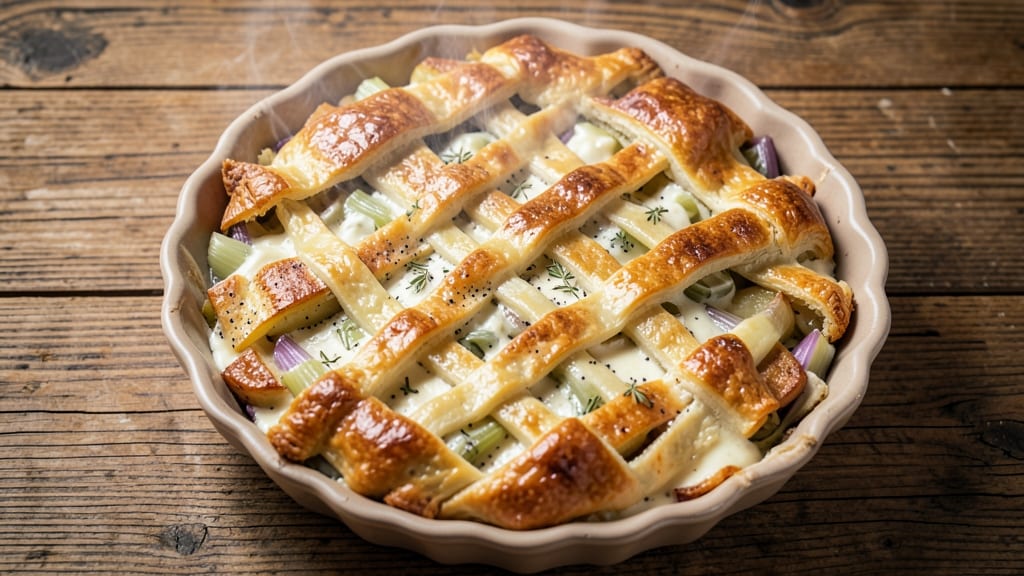
This old-fashioned leek and potato pie recipe brings comfort food tradition to your kitchen with a golden, flaky crust and a savory-sweet filling that balances earthy leeks and tender potatoes.
The secret lies in a precise crust technique—cold butter and ice water create layers that shatter when baked, while the filling simmers until just thick enough to hold its shape.
I first made this during a chilly autumn weekend when I wanted something hearty yet elegant, and it became an instant family favorite.
The filling is where the magic happens—leeks caramelize slowly with garlic and thyme, developing deep, sweet notes that pair perfectly with the creamy potato base. A touch of mustard adds brightness, while a sprinkle of nutmeg ties everything together.
The crust goes blind-baked to ensure it stays perfectly crisp, never soggy. This isn’t just a pie; it’s a showstopper that tastes like home-baked tradition with every forkful.
What makes this recipe foolproof is the step-by-step approach—no shortcuts that compromise texture or flavor. The crust requires patience (chilling the dough is non-negotiable), but the result is worth it: a lattice of golden layers that encase the rich, velvety filling.
The pie bakes until the crust turns a deep amber, signaling that the filling inside has reached its peak—creamy yet firm, with just a hint of caramelized sweetness.
Serve it warm with a dollop of crème fraîche or a sprinkle of fresh herbs for a finishing touch. Perfect for holiday gatherings or a cozy weeknight dinner, this pie delivers restaurant-quality results with a homemade touch. Let’s get baking—your kitchen will smell like autumn in no time.
Ingredients for old fashioned leek and potato pie
Golden crust meets creamy filling—just 14 ingredients for old-school comfort.
| Ingredient | Amount | Notes |
|---|---|---|
| Russet Potatoes 🥔 | 3 lbs | Yukon gold works too |
| Leeks 🧅 | 4 large | White and light green parts only |
| Unsalted Butter 🧈 | 1 ½ cups | Cold, cubed for crust |
| All-Purpose Flour 🌾 | 3 cups | Plus 1 tbsp for dusting |
| Heavy Cream 🥛 | 1 ½ cups | Full-fat for richness |
| Garlic Cloves 🧄 | 4 cloves | Minced for filling |
| Fresh Thyme Leaves 🌿 | ½ cup | Or 1 tbsp dried |
| Dijon Mustard 🍯 | 1 tbsp | For tangy brightness |
| Ground Nutmeg 🌶️ | ¼ tsp | Freshly grated preferred |
| Sea Salt 🧂 | 1 ½ tsp | Kosher preferred |
| Black Pepper 🌶️ | ½ tsp | Freshly ground |
| Ice Water 💧 | ½ cup | For dough elasticity |
| Crème Fraîche 🥛 | ½ cup | For serving (optional) |
| Fresh Parsley 🌿 | ¼ cup | Chopped for garnish |
The leeks are the star—look for firm, white stalks with no bruising. Whole Foods or local markets usually have the freshest, but the grocery store works too. Trim off the dark green tops and slice just the white and pale green parts—those are the sweetest. For the potatoes, Russets or Yukon Golds both work, but Russets hold their shape better. The butter? Use European-style if you can—it has more flavor and less water, which is key for that perfect flaky crust. If you're in a pinch, Land O'Lakes works fine, but let it sit out for 30 minutes to soften before cubing.
No fresh thyme? Dried works at one-third the amount, but fresh has that bright aroma that's hard to beat. Short on crème fraîche for serving? Sour cream or mascarpone in a pinch—just stir in a pinch of lemon juice for tang. The mustard adds brightness, but if you're sensitive to heat, reduce to 0.5 tbsp. For the crust, don't skip the ice water—it keeps the butter from melting too fast and gives you that signature flakiness. If you're making this ahead, prep the filling and crust separately—they keep well for 24 hours in the fridge before assembly.
The crust dough can be made a day ahead—wrap tightly and chill for up to 24 hours. The filling keeps for 2 days in the fridge, but the pie is best eaten fresh. If you're prepping ahead, blind-bake the crust first, then fill and bake later. The pie reheats beautifully—350°F for 15-20 minutes until the crust is golden again. Leftovers? Store in an airtight container for up to 4 days, or freeze the whole pie for 3 months. I always make a double batch—one for dinner, one for lunch the next day.
Why You'll Love This Recipe
- One-Pan Wonder: I swear by this when I’m too tired to juggle pots. Slice the leeks and potatoes, toss them in butter, and let the oven do the work—no peeling, no dicing, just hands-off magic.
- Creamy Gold Standard: That rich, velvety filling? It’s all in the heavy cream and butter—smooth, buttery, with just enough leek sweetness to make it feel indulgent without being heavy.
- Leftovers for Days: Honestly, I make this on Sundays because it reheats like a dream. The crust stays crisp, the filling holds together, and it’s still delicious cold the next day—packed lunches solved.
- Budget-Friendly Luxury: Russets and leeks are cheap staples, but this tastes like a fancy bistro dish. Between us, I’ve served this to guests who swore it was from a 5-star menu—no one ever guessed it’s my go-to for stretching groceries.
Step-by-step instructions for old fashioned leek and potato pie
Here's how to build a pie with layers of golden crust and velvety filling that melts in your mouth.
Prepare the Potato and Leek Filling
Peel the 3 lbs russet potatoes and slice them into ¼-inch thick rounds. Boil them in salted water for 10-12 minutes until fork-tender but not falling apart. Drain immediately and let them cool slightly before handling.
While the potatoes cook, slice the 4 large leeks in half lengthwise and rinse thoroughly under cold water to remove any grit. Finely chop the white and light green parts, discarding the dark green ends. In a large skillet, melt 2 tablespoons of the 1.5 cups unsalted butter over medium heat. Add the chopped leeks and cook for 8-10 minutes until softened and just beginning to brown.
In a large mixing bowl, combine the cooked potatoes, sautéed leeks, 1.5 cups heavy cream, 1 tablespoon dijon mustard, 0.25 teaspoon ground nutmeg, 1.5 teaspoons sea salt, and 0.5 teaspoon black pepper. Mash the potatoes slightly with a potato masher or fork until the mixture is smooth but still has some texture. Stir in the 0.5 cup fresh thyme leaves and 4 cloves minced garlic. Let the filling cool completely before assembling the pie.
Make the Flaky Crust
In a large bowl, combine the 3 cups all-purpose flour, 1.5 teaspoons sea salt, and 0.5 teaspoon black pepper. Cut in the remaining 1.3 cups unsalted butter (from the 1.5 cups total) using a pastry cutter or your fingers until the mixture resembles coarse crumbs with pea-sized butter pieces.
Gradually add the 0.5 cup ice water, 1 tablespoon at a time, mixing gently with a fork until the dough just comes together. Be careful not to overmix—just combine until the dough holds together when pressed. Turn the dough out onto a lightly floured surface and knead it gently 4-5 times until smooth. Divide the dough into two equal pieces and roll each into a 12-inch circle.
Here's the thing—don't worry if your circles aren't perfect. The pie will still taste amazing. Place one dough circle in a 9-inch pie dish, pressing it gently into the bottom and up the sides. Trim any excess dough hanging over the edge. Chill the crust in the refrigerator while you prepare the filling.
Assemble and Bake the Pie
Preheat your oven to 375°F. Spread the cooled potato and leek filling evenly into the chilled pie crust, mounding it slightly in the center. Place the second dough circle on top and press it gently to seal. Trim any excess dough and crimp the edges with a fork or your fingers for a rustic finish.
Cut 4-5 small slits in the top crust to allow steam to escape. Bake the pie for 50-55 minutes until the crust is deep golden brown and the filling is bubbling through the slits. The filling should be set but still slightly jiggly in the center when you gently shake the pie.
Let the pie cool on a wire rack for at least 1 hour before slicing. This resting time allows the filling to set completely and makes it easier to slice cleanly. Serve warm with a dollop of the 0.5 cup crème fraîche and garnish with the 0.25 cup chopped fresh parsley for a pop of color and freshness.
Optional Topping and Serving
For an extra layer of flavor, you can brush the top crust with an egg wash before baking. Whisk 1 egg with 1 tablespoon water and paint it on the crust just before putting it in the oven. This will give you that beautiful, glossy finish.
This pie tastes even better the next day when the flavors have had time to meld. Store any leftovers covered at room temperature for up to 2 days. The flaky crust and creamy filling make this old-fashioned pie a comforting classic that's perfect for family dinners or special occasions.
Pro Tips For Making Old Fashioned Leek And Potato Pie
- Parboil Potatoes Twice: Russets hold their shape better when you blanch them first—boil them 8 minutes, drain, then finish in the oven. I learned this the hard way when my pie filling turned to mush because I skipped this step. The double-cook keeps them tender without falling apart when sliced.
- Sweat Leeks Slowly: Don’t rush the leeks—cook them on medium-low with a splash of water for 15 minutes until they’re silky, not crisp. After burning three batches, I finally figured out that patience here makes the filling taste richer and less bitter.
- Whisk Butter and Flour: Make the roux by cutting cold butter into flour with a fork first, then whisking in the cream gradually. This avoids lumps and gives the filling that creamy, velvety texture instead of a gluey mess. (Yes, even if you’re impatient like me.)
- Blind-Bake the Crust: Chill the pie crust, then weigh it down with dried beans or pie weights before baking—15 minutes at 375°F until golden. This prevents soggy bottoms and saves you from the heartbreak of a limp crust after all that effort. (Your future self will thank you.)
Regional styles of this old fashioned leek and potato pie
English Countryside Roots
This pie traces its origins to England’s rural heartland, where leeks and potatoes became staples during the 18th century. The original versions were simpler—just boiled potatoes, leeks, and a basic pastry—but regional variations emerged as farmers adapted ingredients based on what was available.
In Yorkshire, for instance, cooks often added a splash of ale to the filling for depth, while Cornwall versions incorporated local clotted cream instead of crème fraîche. 🥔 The pie’s rustic charm lies in its humble ingredients elevated by technique.
French Influence
While the dish is British at its core, French culinary traditions seeped in during the 19th century, particularly in the crust technique. The pâte brisée (shortcrust pastry) used here mirrors French methods, where cold butter and ice water create those signature flaky layers.
French chefs also introduced Dijon mustard and nutmeg to the filling, adding brightness and warmth that became hallmarks of the modern version. The blind-baking step? Pure French precision to keep the crust crisp.
American Heartland Adaptations
When British immigrants brought this pie to America, regional twists emerged. In New England, cooks often swapped heavy cream for half-and-half to lighten the filling, while Midwestern versions leaned into ground beef or sausage for extra heartiness.
Southern adaptations sometimes included sweet potatoes or cornmeal in the crust for texture. The pie’s versatility made it a staple at Thanksgiving and harvest festivals, where it was served alongside roasted meats and root vegetables.
Modern Twists
Today, chefs and home cooks are reimagining this classic. Vegan versions use coconut cream and olive oil in the crust, while gluten-free adaptations swap all-purpose flour for almond or rice flour blends. Some modern takes even incorporate smoked paprika or bacon for a savory kick.
The core idea remains the same: a balance of earthy leeks, creamy potatoes, and a buttery crust that’s both comforting and elegant. 💛
Regional Serving Traditions
In England, this pie was traditionally served with pickled onions or mustard greens to cut through the richness. In America, it’s often paired with apple cider or dark ale, especially during autumn gatherings.
For a holiday table, garnish with crispy fried onions or a sprinkle of fresh chives—a nod to both old-world and new-world traditions. The key? Let the pie’s natural flavors shine while complementing, not overpowering, them.
Nutrition facts
Frequently asked questions
Can I make this pie ahead of time?
The crust can be prepped and chilled for up to 24 hours, while the filling keeps well in the fridge for 2 days. For best results, blind-bake the crust first, then fill and bake later. The pie reheats beautifully—just warm at 350°F for 15-20 minutes until golden. It actually tastes better the next day when flavors meld!
What if my crust turns out soggy?
Soggy crusts usually mean steam got trapped. Always blind-bake the bottom crust for 15 minutes before adding filling, and cut small slits in the top crust to release steam. For extra insurance, sprinkle 1 tablespoon of semolina or breadcrumbs on the bottom crust before adding filling. Chill the assembled pie for 30 minutes before baking too—this helps the filling set faster.
Can I substitute Yukon Gold potatoes?
Yes! Yukon Golds work perfectly—they're creamier than Russets and hold their shape well. For this recipe, you might want to mash them slightly more to achieve that velvety texture. Just be sure to boil them until fork-tender (not mushy) to maintain structure. The leeks will still caramelize beautifully with either type.
How do I know when the pie is fully cooked?
The pie is done when the crust is deep golden brown and the filling is just set with a slight jiggle in the center. Test by gently shaking the pie—if it moves slightly but doesn't wobble, it's ready. The internal temperature should reach 175°F in the center. Let it rest for 1 hour before slicing to let the filling firm up properly.
What's the best way to reheat leftovers?
Slice the pie and reheat individual portions in the oven at 350°F for 10-12 minutes until the crust is crisp and the filling is warm through. For microwave reheating, cover with a damp paper towel and heat in 30-second intervals at 50% power. The oven method preserves the crust's texture best. Store leftovers in an airtight container for up to 4 days.