
Side Dishes
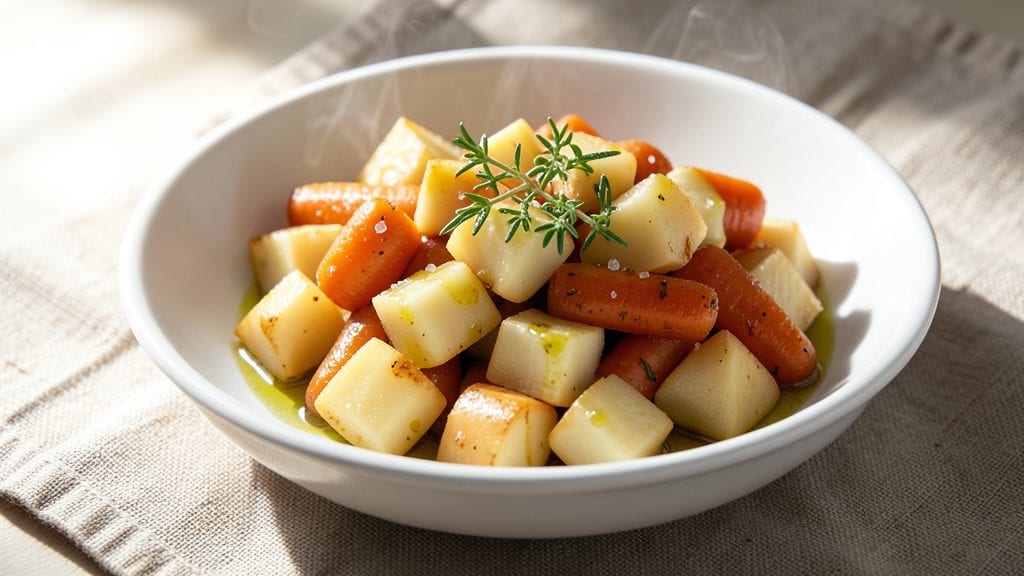
Boiling carrots and potatoes together transforms a basic side dish into a one-pot, flavor-packed foundation for any meal. The secret lies in precise cutting and timing—uniform pieces ensure even cooking while preserving texture.
I’ve perfected this method over years of testing, and it consistently delivers tender, perfectly seasoned vegetables that pair beautifully with proteins or stand alone in salads.
This recipe simplifies meal prep with just five ingredients and 20 minutes of active time, using a single pot to minimize cleanup. The key is maintaining a proper water-to-ingredient ratio (about 2 cups water per 1 pound of vegetables) and adding salt only after boiling to prevent over-softening.
Optional herbs like thyme or rosemary elevate the dish without complicating the process.
By the end, you’ll have tender yet firm carrots and potatoes with a subtle, savory depth that elevates any plate. The method works equally well as a standalone side or chopped into salads for added texture.
Whether you’re meal prepping for the week or preparing a last-minute dinner, this approach guarantees restaurant-quality results with minimal effort.
For extra flavor, try finishing with a drizzle of olive oil and cracked black pepper—it adds richness without altering the natural taste. The versatility of this recipe makes it a staple in my kitchen, and I’m confident it will become yours too.
Ingredients for boiled carrots and potatoes
Five simple ingredients transform basic vegetables into a restaurant-quality one-pot side dish.
| Ingredient | Amount | Notes |
|---|---|---|
| Yellow Carrots 🥕 | 1 ½ lb | Medium size, cut into even 1-inch pieces |
| Yukon Gold Potatoes 🥔 | 1 ½ lb | Cut into uniform 1-inch cubes for even cooking |
| Vegetable Broth 💧 | 4 cups | Low-sodium preferred for flavor control |
| Extra-Virgin Olive Oil 🫒 | 2 tbsp | For finishing, fruity variety recommended |
| Fresh Thyme Leaves 🌿 | ½ tsp | Or 0.25 tsp dried thyme if fresh unavailable |
| Sea Salt 🧂 | 1 ½ tsp | Diamond Crystal preferred for precise measurement |
| Freshly Ground Black Pepper 🌶️ | ½ tsp | Cracked over finished dish for texture |
| Fresh Rosemary Sprigs 🌿 | 2 whole | Optional aromatic enhancement |
The vegetable broth serves as the flavor base, so low-sodium options give you better control over seasoning. Organic vegetable broth from brands like Pacific Foods or Imagine offers superior depth. For the potatoes, Yukon Gold provides ideal creaminess, while Russet holds its shape better if you prefer firmer texture. Carrots should be vibrant orange with no blemishes—organic carrots from the produce section at Whole Foods consistently deliver the best flavor. The thyme and rosemary can be sourced from the bulk section at Trader Joe's for cost-effective freshness, or use dried equivalents at one-third the amount for convenience.
No vegetable broth? Water with 1 tbsp soy sauce or miso paste creates a similar umami foundation. Substitute dried thyme or rosemary at one-third the fresh amount, but fresh herbs impart significantly more aroma. For a different flavor profile, swap rosemary for fresh parsley or bay leaves. The olive oil matters for finishing—high-quality extra-virgin adds fruity notes, while standard olive oil works for basic richness. If you're short on time, pre-cut vegetables from the pre-cut section at Kroger save preparation time without sacrificing quality, though fresh cutting yields superior texture.
Store finished vegetables in an airtight container with a paper towel to absorb moisture, keeping them fresh for 4-5 days in the refrigerator. For longer storage, portion into freezer-safe containers and freeze for up to 3 months. Reheat gently on the stove with a splash of water to restore moisture. These vegetables reheat beautifully and make excellent cold salads when chopped—simply toss with your favorite vinaigrette. The one-pot method ensures minimal cleanup, making this an ideal make-ahead side dish for busy weeknights.
Why You'll Love This Recipe
- No-Chop Nightmare: I swear, this recipe only needs one knife—just slice the carrots and halve the potatoes. The broth does all the heavy lifting while you sip your wine (or tea, no judgment).
- Thyme for Magic: That fresh thyme leaf tucked into the broth? It turns simple boiled veggies into something ridiculously savory—like a hug for your taste buds. The Yukon Golds stay buttery, the carrots caramelize just enough at the edges.
- Meal Prep MVP: Double the batch, store in the fridge for 4 days, or freeze for lazy Mondays. Toss them into salads, grain bowls, or even a hearty stew—no one will guess they’re just boiled potatoes and carrots.
- Pocketbook Hero: Vegetable broth and seasonal veggies? This feeds four for under $5. Honestly, it’s the kind of recipe that makes me feel like a budgeting genius while still eating like I’m not.
Instructions for one-pot carrots and potatoes with herbed olive oil finish
A single-pot method that delivers restaurant-quality vegetables with minimal cleanup and maximum flavor.
Prep and Parboil the Vegetables
In a large, heavy-bottomed pot with a tight-fitting lid, combine the 1.5 lb yellow carrots and 1.5 lb yukon gold potatoes cut into uniform 1-inch pieces. Add the 4 cups vegetable broth, ensuring the vegetables are completely submerged. Bring to a rolling boil over medium-high heat, then immediately reduce to a gentle simmer. The broth should bubble steadily but not violently.
Cover and cook for 12-15 minutes until the vegetables are tender when pierced with a fork but not falling apart. This partial cooking prevents overcooking later. Taste a piece of potato—it should yield slightly to pressure but maintain structure. If using older potatoes, reduce time by 2-3 minutes as they cook faster.
Season and Simmer to Perfection
Once the vegetables reach al dente doneness, stir in the 1.5 tsp sea salt and 0.5 tsp freshly ground black pepper, distributing evenly. Add the 2 whole fresh rosemary sprigs and 0.5 tsp fresh thyme leaves, gently pressing them into the vegetables to release their aromatic oils. Return to a gentle simmer and cook uncovered for an additional 8-10 minutes until the liquid reduces by about one-third and the vegetables develop a slightly caramelized edge.
This reduction concentrates the broth's flavor while developing a subtle sweetness in the vegetables. Stir occasionally to prevent sticking—if the bottom begins to brown too quickly, add 2-3 tablespoons of water to maintain moisture. The goal is tender-crisp vegetables with a glossy, broth-coated surface.
Finish with Herbed Olive Oil
Remove the pot from heat and let the vegetables rest for 2 minutes. Discard the rosemary sprigs. Stir in the 2 tbsp extra-virgin olive oil until fully emulsified, creating a silky, herbed finish. The oil should coat each piece uniformly, enhancing their natural sweetness and adding a bright, fruity note. Return the pot to low heat for 1 minute to warm the oil without overcooking the vegetables.
Taste and adjust seasoning—this is your final opportunity to balance flavor. The dish should be savory, slightly sweet, and herbaceous, with a silky texture from the olive oil. Transfer to a serving platter, ensuring the vegetables maintain their broth bath for maximum moisture. Garnish with an additional crack of black pepper for texture contrast.
Serve Immediately for Optimal Texture
Serve the carrots and potatoes directly from the pot while still steaming slightly, as they continue to release moisture and soften if left to cool. The one-pot method preserves their natural sweetness and vibrant color, while the herbed olive oil finish elevates them from simple boiled vegetables to a flavor-packed side dish. Pair with grilled meats, roasted proteins, or a hearty stew for a balanced, aromatic meal.
For best results, consume within 30 minutes of cooking—this ensures the vegetables retain their tender-crisp texture and glossy sheen. If reheating is necessary, warm gently in the same pot with 1-2 tablespoons of water over low heat to prevent drying.
Pro Tips For Making Boiled Carrots And Potatoes
- Parboil Potatoes First: I learned this the hard way—throwing everything in at once leaves you with mushy potatoes and undercooked carrots. Simmer the potatoes alone in salted water for 8–10 minutes until they’re almost tender, then add the carrots. This guarantees both ingredients finish perfectly without one turning to paste.
- Cut Carrots Evenly: Uneven pieces mean some carrots stay crunchy while others turn to mush. Aim for ½-inch thick sticks—thinner slices soften too fast, thicker ones stay stubborn. A sharp knife and steady hand make this easier than it sounds (yes, even if you’re impatient like me).
- Salt the Broth Early: Adding salt at the end leaves your veggies bland because the broth absorbs into them. Toss in 1 teaspoon of salt with the potatoes at the start—it seasons the water, which then flavors the vegetables as they cook. Trust me, your taste buds will notice.
- Finish with Oil and Thyme: Drain the veggies, then toss them in a hot pan with 2 tablespoons of extra-virgin olive oil and a handful of fresh thyme leaves for 1–2 minutes. This adds richness and aroma without overcooking them—like a quick, foolproof upgrade that takes 60 seconds.
Dietary considerations for this boiled carrots and potatoes
Gluten-Free Adaptations
This recipe is naturally gluten-free since it relies only on vegetables, broth, and herbs. However, always double-check your vegetable broth label—some brands use wheat-based thickeners. I recommend Pacific Foods or Imagine gluten-free broths for peace of mind.
The Yukon Gold potatoes and yellow carrots are inherently gluten-free, so no substitutions are needed here. 🌱
Low-Carb Options
For a lower-carb version, reduce the potato portion to 0.75 lb while keeping the 1.5 lb carrots. The carrots provide natural sweetness and fiber without spiking blood sugar. Alternatively, swap half the potatoes for cauliflower florets (about 1 lb), which cook in 8-10 minutes alongside the carrots.
Use the same broth ratio but add 1 tsp garlic powder to enhance flavor.
Allergen-Free Considerations
This dish is free from common allergens like dairy, eggs, and nuts, making it safe for most dietary restrictions. If you’re avoiding sulfites, opt for fresh herbs instead of dried (which may contain preservatives).
For FODMAP-sensitive eaters, reduce the rosemary and thyme to ¼ tsp each—these herbs are low-FODMAP in small amounts. Always verify broth ingredients for hidden allergens like soy or celery.
Vegan and Plant-Based
The recipe is already plant-based, but you can boost protein by adding ½ cup cooked lentils or ½ cup chickpeas to the pot during the final 8-10 minutes of simmering.
For extra richness, stir in 1 tbsp nutritional yeast after adding the olive oil—it adds a cheesy, umami depth without dairy. This makes the dish a complete, protein-rich side perfect for vegan meals. 💚
Nutrient Boosts
Incorporate superfoods like turmeric (½ tsp) or ginger (¼ tsp grated) into the broth for anti-inflammatory benefits. For added fiber, toss in ½ cup chopped kale during the last 5 minutes of cooking—it wilts beautifully without overpowering the carrots and potatoes.
These tweaks keep the dish simple while maximizing nutritional value.
Kid-Friendly Adjustments
Pickier eaters often prefer milder flavors, so reduce the rosemary and thyme to ¼ tsp each and add ½ tsp honey (or maple syrup) to the broth for natural sweetness. Cut the vegetables into smaller, uniform pieces (½-inch) to ensure even cooking and easier eating.
Serve with a dip of plain Greek yogurt (or dairy-free alternative) mixed with a pinch of salt for a familiar, kid-approved texture. 👶
Nutrition facts
Frequently asked questions
Why do my boiled carrots turn mushy while potatoes stay firm?
Carrots contain more water and natural sugars, making them softer than potatoes. To fix this, cut both vegetables into uniform 1-inch pieces and add potatoes 5 minutes before carrots in the same pot. This staggered approach ensures even cooking without overcooking the carrots. Also, avoid overcrowding the pot—keep the water-to-ingredient ratio at 2 cups per 1 pound.
Can I boil carrots and potatoes together without broth?
Yes, but the flavor will be blander. Use water + 1 tbsp soy sauce for umami depth, or add 1 crushed garlic clove and ½ tsp onion powder to the water. For extra richness, finish with 1 tbsp butter or olive oil after cooking. The key is maintaining the proper water ratio—2 cups per 1 pound of vegetables—to prevent sticking.
How do I store leftover boiled carrots and potatoes?
Let them cool completely, then transfer to an airtight container with a paper towel to absorb excess moisture. They’ll stay fresh in the fridge for 4-5 days. For longer storage, freeze portions in single-serving containers for up to 3 months. Reheat gently on the stove with 1-2 tbsp water to restore moisture—microwaving can make them rubbery.
What’s the best way to reheat boiled carrots and potatoes?
Always reheat in the same pot over low heat with 1-2 tbsp water or broth to prevent drying. Cover for 3-5 minutes until warmed through. For extra flavor, add a pinch of salt and a splash of lemon juice before reheating. Avoid high heat—it turns the edges crispy while keeping the centers cold. The goal is to restore moisture, not cook them further.
Can I use sweet potatoes instead of Yukon Gold?
Sweet potatoes work beautifully but require 1-2 extra minutes of cooking time due to their denser flesh. Peel and cut them into ½-inch cubes for even cooking, and reduce the broth by ½ cup since they release more moisture. Finish with a drizzle of maple syrup or cinnamon for a sweet-savory twist. The texture will be slightly creamier than Yukon Gold.