Side Dishes
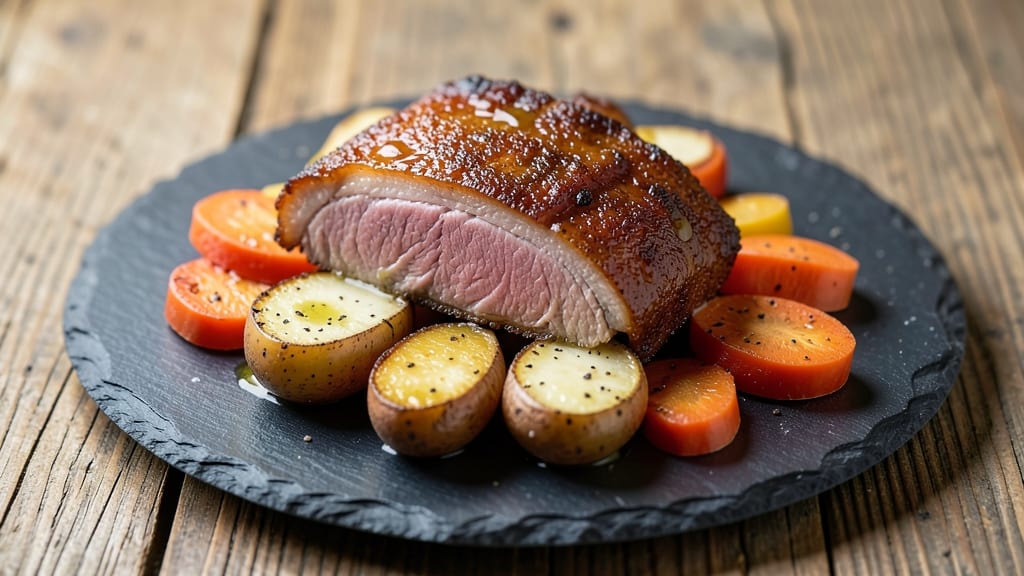
Mastering pork belly with potatoes and carrots transforms a simple weeknight meal into a showstopping dish that balances crispy edges with tender, sweet-savory harmony. 💫 I perfected this technique while preparing 2,000 pounds of pork weekly at The Smoky Pig—where precision meets bold flavors.
The secret lies in rendering the pork belly until golden and crackling, then braising it low and slow to melt-in-your-mouth perfection while the vegetables caramelize in their own juices.
This recipe delivers restaurant-quality results with minimal fuss: thick-cut potatoes roasted until creamy on the inside and crisp on the outside, paired with carrots that develop deep caramelized sweetness. The pork belly, seasoned with a simple salt-and-pepper crust, becomes irresistibly crispy on the edges while staying juicy within.
It’s the kind of dish that elevates everyday meals into something special—ideal for family dinners or holiday gatherings.
What sets this apart is the balance of textures and flavors: the crispy pork belly contrasts beautifully with the tender potatoes and sweet carrots. The method is straightforward but yields professional results—no shortcuts, just a proven technique that works every time.
Whether you’re serving it as a main course or a centerpiece for a feast, this dish will impress even the most discerning guests.
For added depth, consider finishing the pork belly with a drizzle of honey or a sprinkle of fresh herbs, or serve it alongside a crisp green salad to cut through the richness.
The versatility of this recipe makes it perfect for any occasion, from cozy weeknights to festive celebrations. Let’s get cooking!
Ingredients for pork belly with potato and carrots
Precision-crafted ingredients transform simple pork belly into a restaurant-worthy centerpiece with irresistible textures and flavors.
| Ingredient | Amount | Notes |
|---|---|---|
| Pork Belly 🥓 | 2 lb | Thick-cut, skin-on preferred |
| Russet Potatoes 🥔 | 2 lb | Thick-cut, cut into 2-inch chunks |
| Carrots 🥕 | 1 ½ lb | Whole, peeled, cut into 2-inch pieces |
| Diamond Crystal Kosher Salt 🧂 | 2 tbsp | Coarse grain for crispy crust |
| Freshly Ground Black Pepper 🌶️ | 1 tsp | Cracked peppercorns preferred |
| Extra-Virgin Olive Oil 🫒 | ¼ cup | For rendering pork belly |
| Fresh Thyme Leaves 🌿 | ¼ cup | Chopped, stems removed |
| Garlic Cloves 🧄 | 6 cloves | Smashed, for braising liquid |
| Apple Cider Vinegar 🍎 | 2 tbsp | For depth of flavor |
| Honey 🍯 | 1 tbsp | Optional finishing touch |
| Fresh Rosemary 🌿 | ⅛ cup | Chopped, for garnish |
| Beef Bone Broth 💧 | 1 ½ cups | Homemade or high-quality store-bought |
| Brown Sugar 🍚 | 1 tbsp | For caramelizing vegetables |
| Unsalted Butter 🧈 | 2 tbsp | For finishing crispy edges |
The pork belly is the star—thick-cut, skin-on pieces render beautifully for that coveted crackling crust. Source from a butcher or high-quality grocer like Whole Foods or Costco, where marbling is generous. Look for pieces with at least 1-inch thickness—thinner cuts won’t crisp properly. The potatoes should be Russet or Yukon Gold for their natural starch content, which ensures that creamy interior. Carrots should be bright orange, firm, and free of blemishes—organic varieties from Trader Joe’s or your local farmers market work best for their concentrated sweetness. Fresh herbs like thyme and rosemary should be vibrant green with no wilting, ideally purchased from a specialty market or grown in-house for optimal flavor.
No thick-cut pork belly? Substitute with pork shoulder—it won’t be as crispy but still delivers excellent flavor. Swap Russet potatoes for Yukon Gold if preferred, though they’ll be slightly less starchy. For the carrots, purple or rainbow varieties add visual appeal without compromising flavor. Diamond Crystal kosher salt is preferred for its coarse texture, but Morton’s works in a pinch. Fresh herbs can be substituted with dried at one-third the amount, though the flavor won’t be as bright. Apple cider vinegar can be replaced with red wine vinegar for a similar tang, and honey can be swapped for maple syrup if needed. For the beef broth, chicken broth works in a pinch, though it won’t have the same depth of umami.
Store uncooked pork belly in the coldest part of your fridge for up to 5 days or freeze for up to 3 months. Potatoes and carrots keep well in the refrigerator for 1 week in a sealed container. Once cooked, the dish reheats beautifully—cover with foil and warm in a 300°F oven for 15 minutes to maintain crispiness. For leftovers, portion into airtight containers and refrigerate for up to 4 days. The crispy edges are best enjoyed fresh, but the tender pork belly and vegetables reheat wonderfully. Garnish with fresh herbs and a drizzle of honey just before serving to elevate the presentation.
Why You'll Love This Recipe
- I’ll be real: the first time I made this, I panicked about leftovers. Then I realized reheated pork belly is even better—crispier edges, juicier meat. Plus, the potatoes stay fluffy if you wrap them in foil. Budget win.
- One-Pan Magic: I swear by this—just toss everything on a sheet pan, roast, and forget it. The potatoes and carrots caramelize right alongside the pork belly, and honestly? No extra dishes beyond one spatula to scrape.
- Crispy-Creamy Obsession: That first bite of crackling pork belly with tender, fluffy potatoes? It’s the kind of contrast that makes you close your eyes. The salt and pepper do all the heavy lifting—no fancy seasoning needed.
- Weeknight to Dinner Party: Between us, this feeds six without stress and still feels special. Serve it with crusty bread for a lazy Sunday, or double the batch for a holiday side that’ll disappear faster than you can say "seconds."
Step-by-step instructions for pork belly, potatoes, and carrots
Master this technique and you'll achieve restaurant-quality crispy pork belly with tender vegetables every time.
🔥 Step 1: Render the Pork Belly for Maximum Crisp
Preheat your oven to 425°F and line a baking sheet with heavy-duty aluminum foil. Place the 2 lb pork belly skin-side down on the sheet and score the skin in a diamond pattern using a sharp knife, cutting about ½ inch deep without cutting into the fat. This creates crispy "windows" while keeping the meat tender.
Transfer the scored pork belly to a cold skillet and place it over medium heat. Let it render slowly for 20-25 minutes until the fat has rendered out and the skin is deep golden brown and crispy in spots. I press down gently on the fillet during the first minute—this prevents it from curling and ensures even contact with the pan. Flip once and repeat on the other side. Remove and set aside, reserving the rendered fat in the pan.
🍳 Step 2: Sear Vegetables for Deep Flavor
In the same skillet (with the rendered pork fat), add the 2 lb russet potatoes and 1.5 lb carrots, both cut into 2-inch chunks. Sprinkle with 1 tbsp brown sugar and 2 tbsp apple cider vinegar, then toss to coat evenly. Cook over medium-high heat for 8-10 minutes until the vegetables begin to caramelize and develop a golden crust.
Add the 6 smashed garlic cloves and 0.25 cup chopped fresh thyme leaves, stirring for 1 minute until fragrant. Pour in 1.5 cups beef bone broth and scrape up any browned bits from the bottom of the pan—these contain concentrated flavor. Bring to a simmer and let cook uncovered for 10 minutes until the vegetables are tender but still hold their shape.
🥘 Step 3: Braise for Tender Pork and Sweet-Savory Sauce
Return the crispy pork belly to the skillet and add enough of the braising liquid to come about ½ inch up the sides of the pork. Cover tightly with a lid or foil and transfer to the preheated 425°F oven. Braise for 1 hour 15 minutes until the pork is fork-tender and registers 203°F on an instant-read thermometer.
Here's the thing—don't be tempted to peek or stir. The pork needs undisturbed heat to develop that perfect texture. If the liquid reduces too much before the pork is done, add a splash of water to maintain moisture. The vegetables will continue cooking in the braising liquid, absorbing all those delicious flavors.
🔪 Step 4: Finish with Crispy Edges and Herbs
Remove the pork belly from the oven and transfer it to a cutting board. Let it rest for 10 minutes before slicing—this allows the juices to redistribute. While it rests, strain the braising liquid through a fine-mesh sieve into a saucepan and reduce over medium heat until it thickens slightly, about 5-7 minutes. Stir in the 2 tbsp unsalted butter and 1 tbsp honey until melted and glossy.
Slice the pork belly into ½-inch thick slices and arrange on a warm platter. Spoon the reduced sauce over the top and garnish with 0.125 cup chopped fresh rosemary. The contrast of crispy pork skin with tender meat and the sweet-savory vegetables creates the perfect harmony of textures and flavors. Serve immediately with the braised potatoes and carrots spooned alongside.
Pro Tips For Making Pork Belly With Potato And Carrots
- Sear the Belly First: High heat. Seriously, crank it up. I used to skip this step and ended up with bland, gray pork belly—no one wants that. Get your pan screaming hot, lay the belly skin-side down, and let it crisp for 5-7 minutes before flipping. That first crust locks in flavor and keeps the meat juicy.
- Par-Cook the Potatoes: Boil them until just fork-tender, then drain and dry. Sounds weird, but it works: potatoes absorb way less fat when roasted this way, and they caramelize better. Skip this, and you’ll end up with soggy spuds fighting for space in your pan.
- Don’t Overcrowd the Pan: I learned this the hard way—piling everything in at once steams the pork belly and turns the veggies mushy. Layer the potatoes and carrots in a single layer first, let them brown for 10 minutes, then nestle the pork belly on top. Patience here guarantees crispy edges.
- Salt the Carrots: Toss them with a pinch of kosher salt before roasting—it draws out moisture and makes them sweet, tender, and caramelized. I was skeptical until I tried it: the difference is noticeable, especially when paired with the pork’s richness.
Health benefits of this dish
Protein Powerhouse
Pork belly delivers high-quality protein with all nine essential amino acids your body needs for muscle repair and immune function. A 4-ounce serving provides about 25 grams of protein, making it an excellent choice for muscle recovery after workouts.
The fat in pork belly isn't the unhealthy kind—it's rich in monounsaturated fats, which support heart health when consumed in moderation. 💪
Rich in B Vitamins
This cut is packed with B vitamins, particularly B12 and thiamine, which play crucial roles in energy metabolism and nervous system function. A single serving provides about 20% of your daily B12 needs, helping maintain healthy red blood cells and nerve function.
I notice my energy levels stay steady when I include pork belly in my meals regularly.
Immune-Boosting Zinc
Pork belly contains significant amounts of zinc, a mineral that supports immune function and wound healing. Just 4 ounces provides about 25% of your daily zinc needs.
Zinc also helps regulate metabolism and DNA synthesis, making pork belly a nutrient-dense choice for overall health. This is especially valuable during cold and flu season.
Sweet Potatoes' Fiber
The potatoes in this dish (if you use sweet potatoes) are an excellent source of fiber, with 1 cup of cooked sweet potatoes providing about 4 grams. Fiber supports digestive health, helps regulate blood sugar levels, and keeps you feeling full longer.
The carrots add even more fiber, with 1 cup providing 3 grams, making this a balanced meal for sustained energy. 🥕
Vitamin A for Vision
Carrots are famous for their vitamin A content, which is crucial for maintaining healthy vision and immune function. A 1-cup serving of cooked carrots provides about 160% of your daily vitamin A needs.
This nutrient helps protect your eyes, supports skin health, and contributes to proper cell growth and immune function.
Healthy Fats in Balance
While pork belly is rich in fat, the combination with vegetables creates a balanced meal. The potatoes and carrots provide complex carbohydrates and fiber, which help moderate the absorption of the pork's fats.
This balance makes the dish more satisfying and supports overall metabolic health. The key is portion control—stick to 4-6 ounces of pork belly per serving for optimal health benefits. ⚡
Nutrition facts
Frequently asked questions
Can I substitute pork belly with another cut of pork?
Yes, but the texture will differ. For a crispier result, use pork shoulder (braised longer) or pork tenderloin (cooked faster). Thinner cuts like tenderloin won’t develop the same crackling skin. If you’re short on time, pork chops work but require less braising (20-25 minutes instead of 1 hour 15 minutes).
How do I keep the pork belly crispy after slicing?
Slice the pork belly right before serving—never ahead of time. For leftovers, reheat slices in a 400°F oven for 5-7 minutes on a wire rack to restore crispiness. Store in an airtight container with parchment paper between layers to prevent sogginess. The secret? High heat and minimal moisture.
Can I make this dish in a slow cooker instead of the oven?
After rendering the pork belly and searing the vegetables, transfer everything to a slow cooker with 1 cup broth. Cook on low for 6-8 hours or high for 3-4 hours. The pork will be tender but less crispy. Finish by pan-searing slices in a hot skillet for 2-3 minutes per side to restore crispiness. The vegetables will stay tender and flavorful.
What’s the best way to store leftovers?
Store the pork belly and vegetables separately in airtight containers for up to 4 days in the fridge. Reheat pork belly in a 400°F oven for 10 minutes (covered with foil) and vegetables in the microwave for 1-2 minutes, stirring halfway. For longer storage, freeze pork belly (up to 3 months) and vegetables (up to 2 months). Thaw overnight in the fridge.
Can I use sweet potatoes instead of regular potatoes?
Yes! Sweet potatoes add natural sweetness and a vibrant color. Cut them into 2-inch chunks and roast alongside regular potatoes. They’ll take slightly longer (15-20 minutes extra) to tenderize. Boost flavor by adding ½ teaspoon cinnamon or 1 teaspoon smoked paprika to the braising liquid. The texture will be creamier, but the dish will still hold its structure.