
Side Dishes
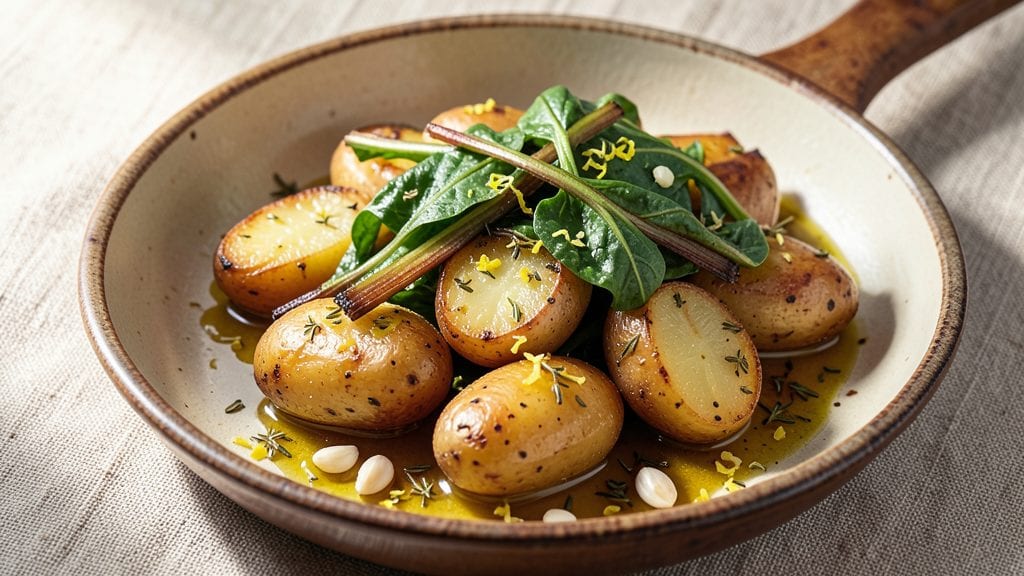
This chard and potato recipe transforms humble ingredients into a creamy, hearty side dish that steals the show at any table. The earthy sweetness of Swiss chard pairs perfectly with tender, buttery potatoes, all cooked together in one pan for minimal cleanup and maximum flavor.
What makes this dish special is how it balances textures—silky greens and fluffy spuds—while keeping prep simple and ingredients accessible.
Professional chefs often call this a "poor man's gourmet dish" because it delivers restaurant-quality depth with basic pantry staples. The secret lies in proper seasoning and timing: potatoes roast until golden while chard wilts into tender, vibrant greens.
This vegetarian-friendly recipe works equally well as a side for grilled meats or as a satisfying main course when paired with crusty bread.
What you'll end up with is a dish that's rich without being heavy, with potatoes that melt in your mouth and chard that maintains its vibrant color. The creamy element comes from a touch of olive oil and garlic, which infuses every bite with aromatic warmth.
It's the kind of recipe that feels both comforting and refined—perfect for weeknight dinners or special occasions.
Serve this one-pan wonder alongside roasted chicken, fish, or even as a standalone vegetarian meal. The versatility makes it ideal for meal prep or last-minute gatherings, while the flavor profile ensures everyone at the table will ask for seconds.
Let's get cooking with this foolproof method that brings out the best in both chard and potatoes.
Ingredients for chard potato
Fifteen simple ingredients transform into a restaurant-worthy vegetarian dish with minimal effort.
| Ingredient | Amount | Notes |
|---|---|---|
| Baby Potatoes 🥔 | 1 ½ lb | Halved or quartered, skin-on preferred |
| Swiss Chard 🌿 | 1 lb | Stems chopped, leaves roughly torn |
| Extra-Virgin Olive Oil 🫒 | ½ cup | High-quality, fruity variety |
| Garlic Cloves 🧄 | 4 cloves | Minced or finely chopped |
| Vegetable Broth 💧 | 1 ½ cups | Low-sodium preferred |
| Lemon Juice 🍋 | 1 tbsp | Freshly squeezed |
| Dried Thyme 🌿 | 1 tsp | Or 1 tbsp fresh thyme leaves |
| Salt 🧂 | 1 ½ tsp | Kosher or sea salt preferred |
| Black Pepper 🌶️ | ½ tsp | Freshly ground |
| Red Wine Vinegar 🍷 | 1 tbsp | For brightness |
| Unsalted Butter 🧈 | 2 tbsp | Full-fat for richness |
| Red Pepper Flakes 🌶️ | ¼ tsp | Optional, for heat |
| Fresh Parsley 🌿 | ¼ cup | Chopped, for garnish |
The Swiss chard is the star here—look for vibrant, deep green leaves with crisp stems, not wilted or yellowing. Trader Joe's and Whole Foods carry the freshest bunches, but any well-stocked grocery store should have it. Baby potatoes are ideal for even cooking, but regular-sized potatoes work too (just cut them smaller). The key to great chard is removing the tough stems first—slice them into rounds and save them for the pot. Fresh thyme is best, but if you're using dried, measure carefully—it's more concentrated than fresh. For the garlic, peel and chop it just before cooking to preserve its flavor.
No vegetable broth? Water with an extra pinch of salt works in a pinch, but the depth of flavor is worth the effort. Substitute red wine vinegar with white vinegar if needed, though the color will differ. Fresh parsley can be swapped for dried at one-third the amount, but it lacks the bright pop of color. The butter adds richness—don't skip this step—but if you're watching fat, use olive oil instead. For extra creaminess without dairy, stir in a splash of coconut milk at the end. The red pepper flakes are optional, but they add a subtle warmth that balances the earthiness of the chard.
This dish reheats beautifully—just add a splash of broth or water to loosen it up. Store leftovers in an airtight container for up to 4 days in the fridge, though the flavor improves over time as the potatoes absorb the garlic and herbs. For meal prep, double the recipe and freeze half in portions—3 months in the freezer with no loss of quality. Garnish with fresh parsley right before serving to keep it vibrant. The potatoes will soften further when reheated, so plan accordingly if you're serving it hot immediately.
Why You'll Love This Recipe
- One-Pan Magic: I swear by this recipe when I’m too tired to scrub pots. Toss the baby potatoes and chard on a sheet pan, drizzle with olive oil, and let the oven do the work. Minimal chopping, no mess—just pure, hands-off satisfaction.
- Garlic-Chard Love: That first bite? The crispy edges on the potatoes paired with the tender, slightly bitter chard—it’s a flavor combo that feels fancy but isn’t. A splash of broth and a crushed garlic clove turn simple ingredients into something deeply savory.
- Lunchbox Hero: Between us, this is my go-to for meal prep. The potatoes hold up for days, and the chard stays vibrant if you store it separately (trust me, it’s worth it). Pack it cold or reheat it—either way, it’s a lunch that actually makes me happy.
- Budget Win: I buy baby potatoes and chard in bulk—they’re cheap, filling, and last forever. A single pan of this feeds four for under $8, and the leftovers? Even better the next day. No food waste, no guilt, just good eats.
Step-by-step instructions for chard and potato recipe
Here's how to create a harmonious blend of tender potatoes and wilted greens in one flavorful pan.
Prep and Roast the Baby Potatoes
Preheat your oven to 425°F. Halve or quarter the 1.5 lb baby potatoes (skin-on preferred) and place them in a large oven-safe skillet. Drizzle with 0.25 cup of the extra-virgin olive oil, then season generously with 1 tsp salt, 0.25 tsp black pepper, and 0.125 tsp dried thyme. Toss to coat evenly, ensuring every potato is well-oiled and seasoned.
Roast the potatoes for 20-25 minutes, stirring once halfway through, until they begin to turn golden brown and feel tender when pierced with a fork. The goal is to get them partially cooked but still firm—this ensures they'll finish cooking perfectly when combined with the greens later. Don't overcrowd the pan; if needed, use two smaller skillets to allow for even browning.
Sauté Garlic and Chard
While the potatoes roast, heat 0.25 cup extra-virgin olive oil in the same skillet over medium heat. Add the 4 minced garlic cloves and sauté for 30-60 seconds until fragrant but not browned. You'll know it's ready when the kitchen fills with that unmistakable garlic aroma.
Add the 1 lb chopped Swiss chard stems first, cooking for 3-4 minutes until they soften slightly. Then, stir in the roughly torn chard leaves and cook for another 2-3 minutes until just wilted but still vibrant green. Avoid overcooking—the leaves should remain tender-crisp with a slight bite. Season with the remaining 0.5 tsp salt and 0.25 tsp black pepper. Remove the skillet from heat and set aside.
Build the Creamy Sauce
Return the skillet with potatoes to the oven and reduce the heat to medium-low. Pour in the 1.5 cups vegetable broth, scraping up any browned bits from the bottom of the pan. Add the 1 tbsp red wine vinegar and 1 tbsp lemon juice, then stir to combine. Let the mixture simmer for 5-7 minutes until the broth reduces slightly and begins to thicken.
Reduce heat to low and stir in the 2 tbsp unsalted butter and 0.25 tsp red pepper flakes. The butter will melt into the sauce, creating a rich, velvety texture. If the sauce is too thick, add 2-3 tablespoons of water to reach your desired consistency. Taste and adjust seasoning with additional salt or pepper if needed.
Combine and Finish
Carefully transfer the wilted chard to the skillet with the potatoes and broth mixture. Gently fold everything together, ensuring the potatoes are coated in the creamy sauce. Let the dish simmer uncovered for 5-7 minutes over medium-low heat, stirring occasionally, until the potatoes are fork-tender and the sauce has thickened slightly.
To finish, stir in the 0.25 cup chopped fresh parsley and remove the skillet from heat. Let the dish rest for 2-3 minutes before serving. The flavors will meld together beautifully, delivering a creamy, earthy dish with perfectly tender potatoes and wilted greens. Garnish each serving with an additional sprinkle of parsley and a pinch of red pepper flakes for color and heat.
Pro Tips For Making Chard Potato
- PARBOIL POTATOES FIRST: Swiss chard wilts fast—don’t let it steal heat from your potatoes. Boil the baby potatoes for 8-10 minutes in salted water (they’ll finish later), then drain and set aside. This keeps them from turning to mush when the chard hits the pan.
- TRIM CHARD LIKE A PRO: Skip the time-consuming stem-by-stem peeling. Stack leaves, fold in half, and slice the thick stems off in one motion with a sharp knife—discard or chop for extra texture. The thinner the stems, the faster they cook, so don’t skip this.
- SWEAT GARLIC LOW AND SLOW: Crank the heat to medium-low when adding minced garlic to olive oil. High heat burns it instantly, turning your dish bitter. Let it sizzle gently for 30 seconds—just until fragrant—then toss in the chard. Patience here makes all the difference.
- DEGLAZE WITH BROTH, NOT WATER: After browning potatoes in olive oil, splash in ¼ cup vegetable broth instead of water. The salt and depth of flavor from the broth will carry through the dish, especially if you’re skipping extra seasoning later. It’s a tiny effort for noticeable impact.
Pro cooking tips for perfect results
One-Pan Efficiency
This recipe thrives on the one-pan method, which saves time and cleanup while ensuring even cooking. I use a 12-inch cast-iron skillet (like Lodge) because it retains heat perfectly and transitions seamlessly from oven to stovetop.
The potatoes roast directly in the pan, then the chard sautés in the same surface, eliminating the need for multiple dishes. 🔥
Timing Precision
Potatoes and chard have different ideal cooking times, so I partially cook the potatoes first (until golden but still firm) before adding the chard. This prevents the potatoes from becoming mushy when combined with the greens.
Use a meat thermometer to check doneness—potatoes should reach 205°F internal temperature when fully cooked.
Garlic Infusion
Garlic is the flavor backbone here, and mincing it just before cooking preserves its freshness. Sauté it in extra-virgin olive oil over medium heat for exactly 30-60 seconds—any longer risks burning and bitterness.
I like to use Penzeys brand for its bold, aromatic profile. Add the chard stems first to soften them slightly before introducing the leaves.
Sauce Thickening
The creamy sauce comes from reducing the vegetable broth and incorporating butter at the end. For extra richness, I sometimes add 1 tablespoon of heavy cream or 2 tablespoons of crème fraîche while stirring in the parsley.
If the sauce seems too thin, simmer uncovered for an additional 2-3 minutes to thicken naturally.
Acid Balance
The red wine vinegar and lemon juice brighten the dish, cutting through the richness of the butter and potatoes. Taste as you go—I often adjust with an extra ½ teaspoon of lemon juice if the dish feels too heavy.
For a tangier finish, add ½ teaspoon of Dijon mustard to the sauce before combining with the potatoes.
Resting Matters
Letting the dish rest for 2-3 minutes after combining allows the flavors to meld and the sauce to coat the potatoes evenly. This step prevents the potatoes from releasing too much starch into the sauce, keeping the texture creamy but not gloppy.
Serve immediately for the best texture and flavor harmony. 💫
Nutrition facts
Frequently asked questions
Can I use regular potatoes instead of baby potatoes?
Yes, but you'll need to cut them into smaller, even pieces—about 1-inch cubes. Regular potatoes take longer to cook, so increase roasting time to 30-35 minutes until tender. Baby potatoes are ideal because their size ensures even cooking without overcrowding the pan.
What if I don't have vegetable broth?
Use water + 1 extra pinch of salt and a splash of soy sauce (½ teaspoon) for depth. For more umami, add 1 teaspoon of miso paste when building the sauce. The dish will still be flavorful, though broth adds a richer base.
How can I make this dish dairy-free?
Skip the butter and use 2 extra tablespoons of olive oil instead. For creaminess, stir in ¼ cup coconut milk or 2 tablespoons of nutritional yeast at the end. The texture will be lighter but still satisfying, with a subtle nutty flavor from the yeast.
Why did my chard turn mushy?
Overcooking is the most common cause—chard leaves should wilt in 2-3 minutes, not soften like spinach. Always add stems first (they take longer), then leaves. If using older chard, reduce cooking time by 30 seconds to preserve texture.
Can I make this ahead of time?
Store leftovers in an airtight container for up to 4 days in the fridge. Reheat gently with 2 tablespoons of water or broth to restore creaminess. For freezing, portion into single servings and freeze for up to 3 months—thaw overnight in the fridge.